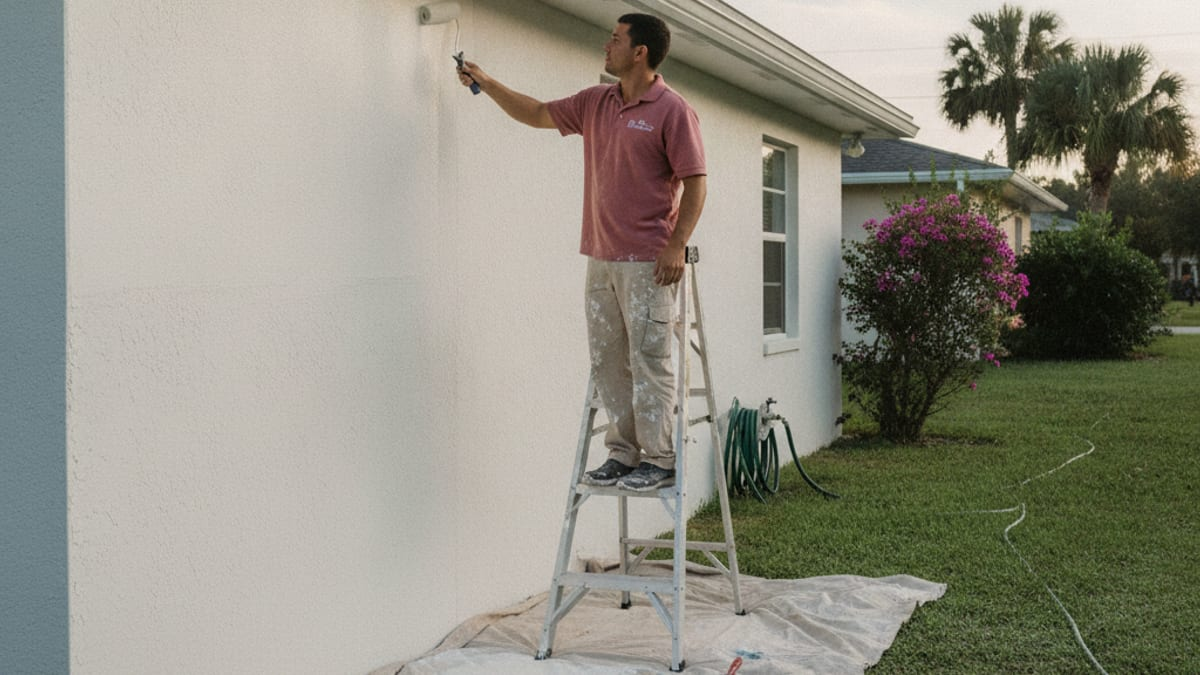
Timing an exterior paint job in Tampa Bay isn’t just about picking a week you’re free. Humidity, daily storm patterns, and hurricane season all genuinely affect how well paint cures and how likely a fresh job is to get interrupted or damaged mid-project. Here’s what actually matters when you’re deciding when to schedule.
Why summer is the trickiest season here
Tampa Bay’s summer, roughly June through September, brings near-daily afternoon thunderstorms that build almost like clockwork, often rolling in by early to mid-afternoon even on an otherwise clear morning. That pattern makes scheduling exterior work genuinely difficult, since a crew painting in the morning can get rained out before the coat has had time to set, and a rain event on fresh, uncured paint can wash out the finish or cause streaking and uneven texture.
Humidity during these months regularly sits in the 80-90% range for much of the day, which slows evaporation and extends dry time well beyond what the paint can’s label assumes. A coat that would touch-dry in an hour under lab conditions might need three to four hours here before it can handle even light moisture, and full cure to final hardness can take two to three weeks instead of the standard week.
Hurricane season adds real project risk
June through November is Florida’s official hurricane season, and beyond the daily storm pattern, there’s genuine risk of a named storm disrupting a project in progress, whether through direct wind and rain damage to fresh paint or simply the scheduling chaos of a crew needing to secure equipment and materials ahead of an approaching system. Scheduling exterior work outside the peak of hurricane season, when it’s practical to do so, reduces that risk meaningfully.
This doesn’t mean exterior work is impossible in summer. Plenty of jobs happen successfully between June and November, especially with a crew experienced at working around Tampa Bay’s storm patterns, starting early in the day and building in buffer time. But it does mean summer scheduling carries more uncertainty than the dry season does.
Why the dry season works better
Roughly November through April, Tampa Bay sees its dry season: lower humidity, far less frequent rain, and more predictable weather day to day. Paint applied during these months cures more consistently and closer to the label’s stated timeline, since there’s less atmospheric moisture competing with the paint’s own evaporation process. Crews also face fewer weather-related delays, which keeps a project moving on the timeline originally quoted rather than stretching out over rain-interrupted days.
Cooler mornings and lower humidity also make for more comfortable working conditions on ladders and lifts, which is a real factor for crew safety and pace on longer two-story jobs.
Temperature matters too, but it’s rarely the limiting factor here
Most exterior paint products need surface and air temperatures within a specific range, generally above 50 degrees Fahrenheit and below extreme heat, to apply and cure properly. Tampa Bay rarely drops below that threshold even in winter, so cold isn’t the constraint it is in northern climates. The bigger risk here is the opposite: painting on a surface that’s gotten too hot from direct summer sun, which can cause the paint to dry too fast on the surface before it’s properly bonded, leading to poor adhesion and premature peeling.
Experienced crews work around this by starting on the shaded side of the house in the morning and following the sun around the home through the day, rather than painting a south or west-facing wall during peak afternoon heat.
Interior work: the season-agnostic option
Unlike exterior painting, interior work doesn’t depend on weather in any meaningful way beyond running the air conditioning to help control indoor humidity during the job. This makes interior painting a smart project to schedule during the peak of summer or hurricane season, when exterior work is riskier, letting homeowners keep a painting project moving year-round by shifting the type of work to match the season.
A real scheduling example across the year
A homeowner calling in January for an exterior repaint is looking at some of the most favorable conditions of the year: low humidity, minimal rain risk, and typically faster crew availability since dry-season demand hasn’t yet hit its peak. By March and April, demand climbs as more households want the work done before summer heat and storms arrive, and booking windows can stretch to three or four weeks out.
Calling in July for the same project means dealing with daily storm risk and slower cure times, but an experienced crew can still deliver a solid result by starting early each morning, working the shaded side of the house first, and building weather buffer days into the schedule from the start rather than promising an unrealistic tight timeline that a single afternoon storm blows up.
What happens if rain hits mid-project
A brief, unexpected shower on paint that’s had a few hours to set usually causes minimal damage, maybe some minor streaking that a light touch-up handles. Rain hitting paint within the first hour or so of application, before it’s had time to skin over, is a bigger problem and can require re-doing that section once conditions clear and the surface dries out fully again.
Experienced crews track weather forecasts closely during a project and time each day’s work to finish ahead of the afternoon storm window whenever the forecast allows, which is part of why local weather familiarity matters more for exterior work here than in climates with more predictable, less frequent rain.
Booking lead times by season
During the peak dry season months, roughly January through April, popular local crews often book two to four weeks out, sometimes longer heading into a busy spring. Summer and early fall typically have more open availability given lower general demand for exterior work, which is worth knowing if your project has some scheduling flexibility and you’re comfortable working around the storm-pattern risk in exchange for a faster start date.
Planning around a specific deadline
If you’re painting ahead of a home sale, a family event, or before hurricane season shutters go up for the year, start the process with enough lead time. Getting on a reputable crew’s schedule, especially during the busier dry season months when demand for exterior painting peaks, often means booking several weeks out. Add buffer time for potential weather delays if any part of the project falls during the wetter months, rather than planning down to the exact day.
Reading a short-term forecast versus the season overall
Even within the ideal dry season, a specific week can bring an unexpected front or rain system through Tampa Bay, and experienced crews check the short-term forecast before starting a project regardless of what month it is. A single rainy week in February doesn’t undo the general seasonal advantage of painting outside hurricane season, and a well-run crew simply shifts the schedule a few days rather than pushing through in bad conditions that would compromise the final result.
This is part of why it’s worth asking a prospective contractor how they handle weather delays contractually, whether that means a flexible start date built into the estimate or a clear policy on rescheduling, so there’s no confusion if a storm pushes the timeline back a few days once the project is underway.
When is the best time of year to paint a house exterior in Florida?
The dry season, roughly November through April, offers the most consistent cure conditions and the lowest risk of rain interrupting a fresh coat. Summer work is possible but carries more scheduling uncertainty due to daily storms and hurricane season.
Can you paint a house exterior during hurricane season?
Yes, plenty of projects happen successfully between June and November, but there’s added risk from daily afternoon storms and the chance of a named storm disrupting the schedule. Crews experienced with Tampa Bay’s weather patterns build in buffer time to manage this.
Does Florida’s heat affect exterior paint application?
Cold rarely limits exterior painting here, but painting a surface that’s gotten too hot from direct sun can cause paint to dry too fast and bond poorly. Experienced crews work the shaded side of the house first and follow the sun through the day.
Is interior painting affected by season in Florida?
Not significantly. Interior work is a good option to schedule during summer or hurricane season, when exterior conditions are less predictable, keeping a home improvement project moving year-round.
Ready to schedule your exterior project for the right season? Call (813) 000-0000 and we’ll connect you with a local crew that plans around Tampa Bay’s weather, not against it.