How to Prep a Room for Interior Painting
The paint job only looks as good as the prep underneath it, and most of the mistakes that show up on a wall a week later trace back to a step skipped before the roller ever came out.
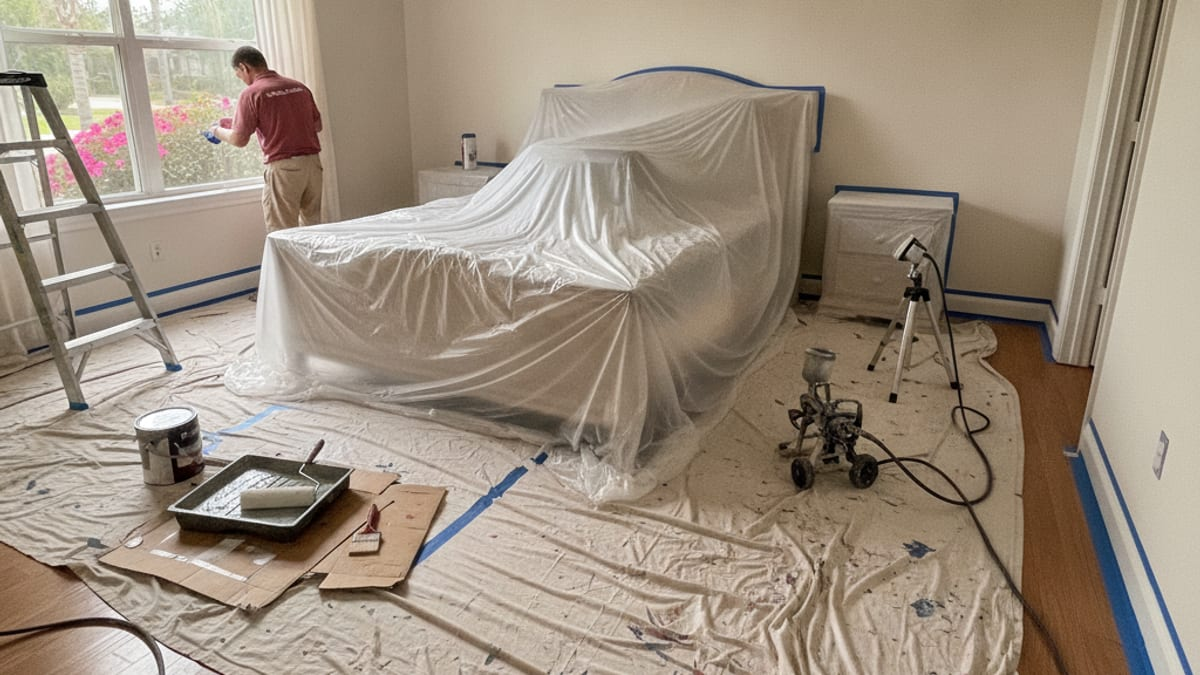
Clear, Cover, and Protect Before Anything Else
Move furniture to the center of the room or out entirely, and cover what's left with plastic sheeting rather than old sheets, which let paint soak straight through. Remove switch plates and outlet covers instead of taping around them, since it takes about the same effort and gives a much cleaner result. Lay canvas drop cloths on the floor, not plastic. Plastic gets slick underfoot and doesn't absorb drips the way canvas does.
Clean and Repair the Walls First
Wipe down walls with a damp cloth, or a mild degreaser in kitchens, to remove dust, cooking residue, and handprints. Paint doesn't bond well over a dirty surface, no matter how good the primer is. Fill any nail holes or dings, sand patches smooth, and caulk gaps where trim meets wall for a finished look. Do this the day before you plan to paint so compound and caulk are fully dry before tape goes up.
Tape, Then Cut In Before You Roll
Use painter's tape, not standard masking tape, which tends to pull existing paint off when removed. Press it down firmly along trim, ceiling lines, and any surface you're not painting so paint can't bleed underneath. Cut in the edges with a brush first, then roll the large open areas of the wall while those cut-in edges are still wet. That's what keeps the transition smooth instead of leaving a visible lap line where the brushwork meets the roller.
Rather have a pro handle it?
Free estimates across the Tampa Bay area. A real person picks up.
Keep reading.
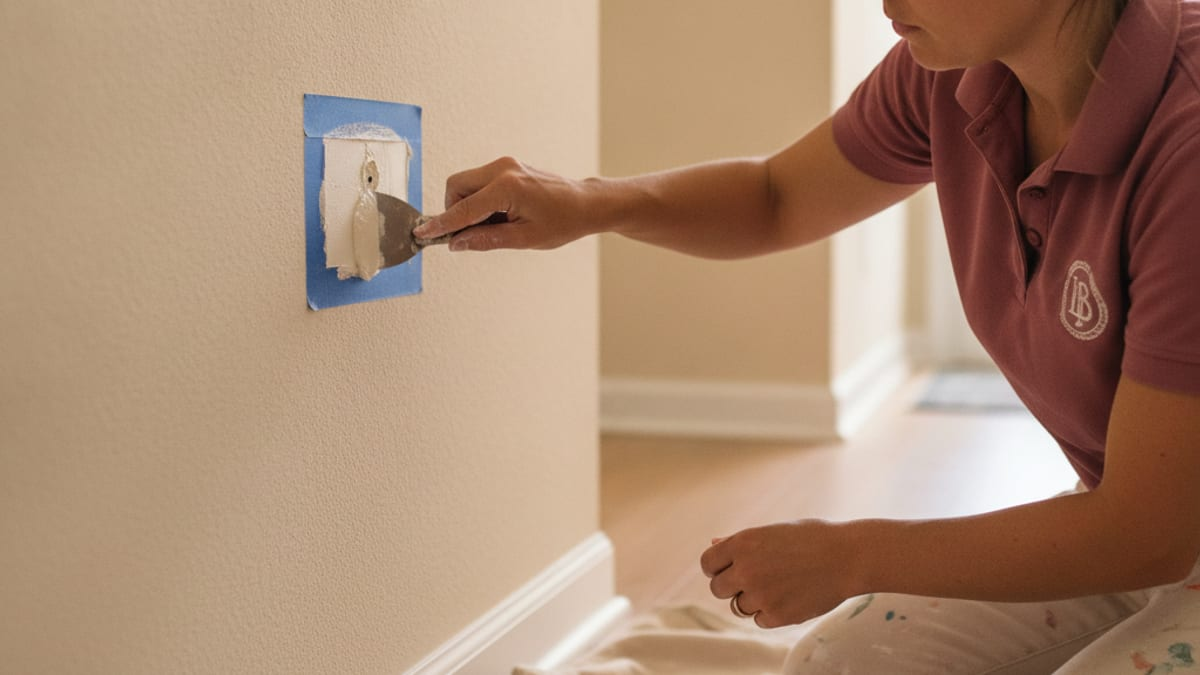
How to Patch a Small Drywall Hole Before Painting
Nail holes, doorknob dings, and small screw holes are an easy DIY fix, but rushing the patch is the most common reason a fresh paint job shows flaws under lamp light.
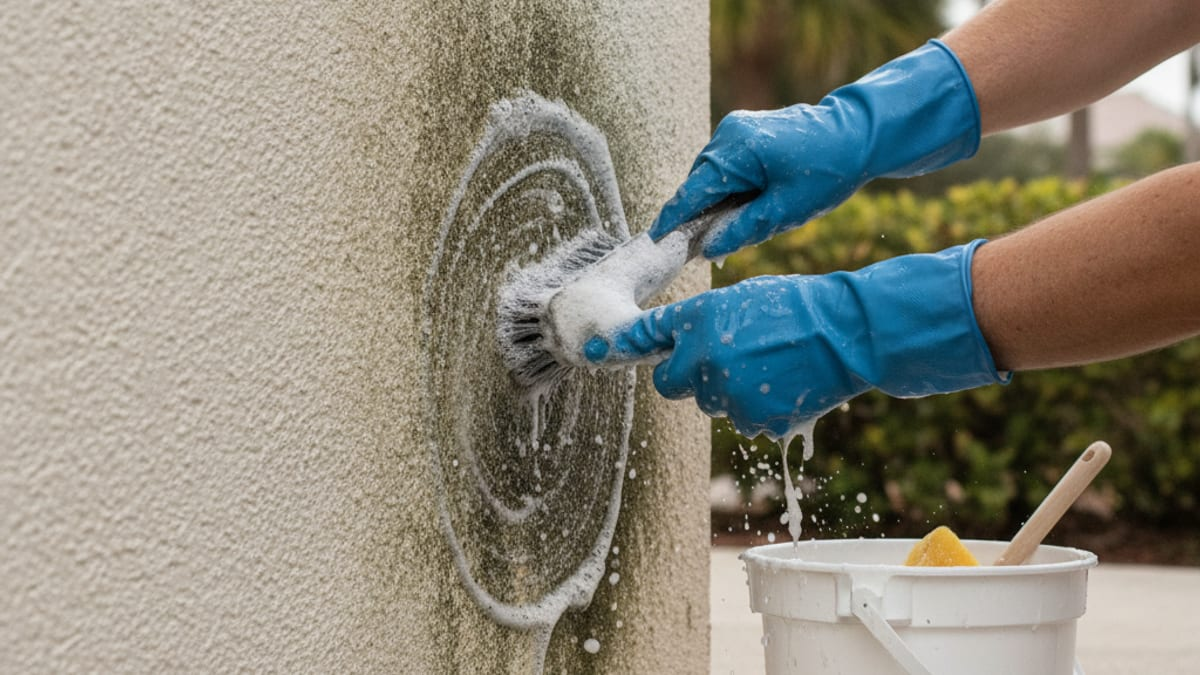
Cleaning Mildew Off Stucco and Siding Before Painting
Tampa Bay's year-round humidity means mildew comes back fast on stucco and siding, and painting over it without cleaning it first is the number one reason exterior paint peels within a year.
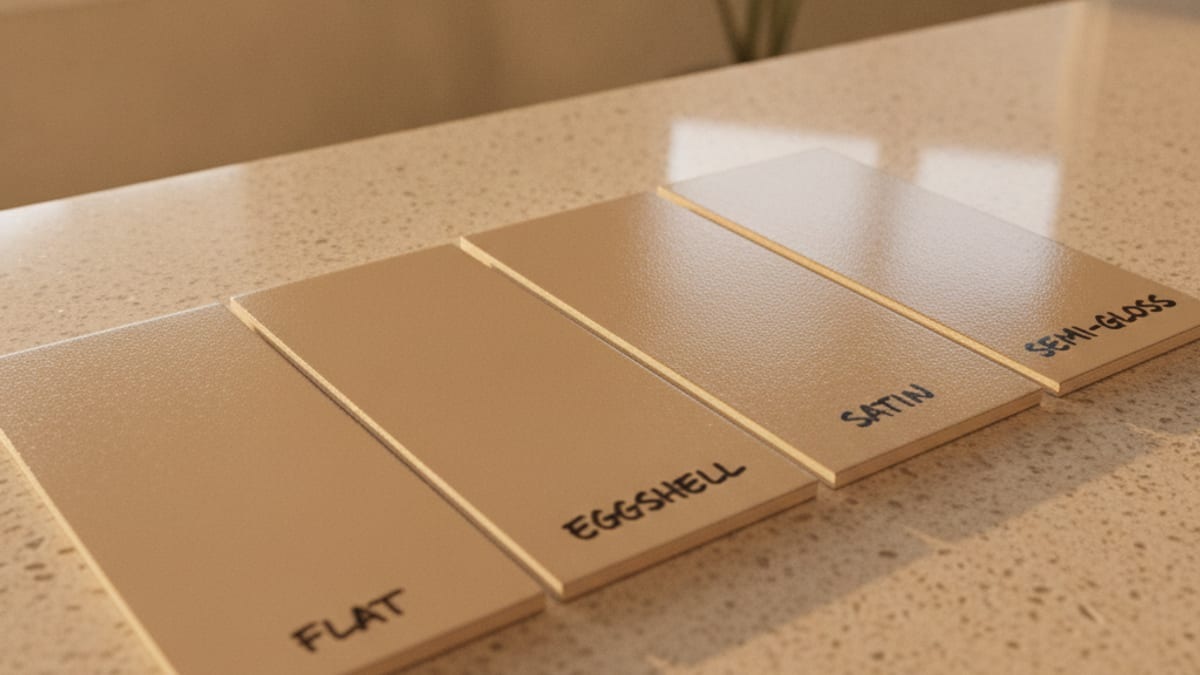
Choosing the Right Paint Sheen for Every Room
Sheen affects how durable and easy to clean a wall is, not just how shiny it looks, and picking the wrong one is a quiet mistake that shows up as scuffs or glare within a year.